How Does a Flame Arrester Work? A Practical Engineering Breakdown
Why Flame Arresters Are Used
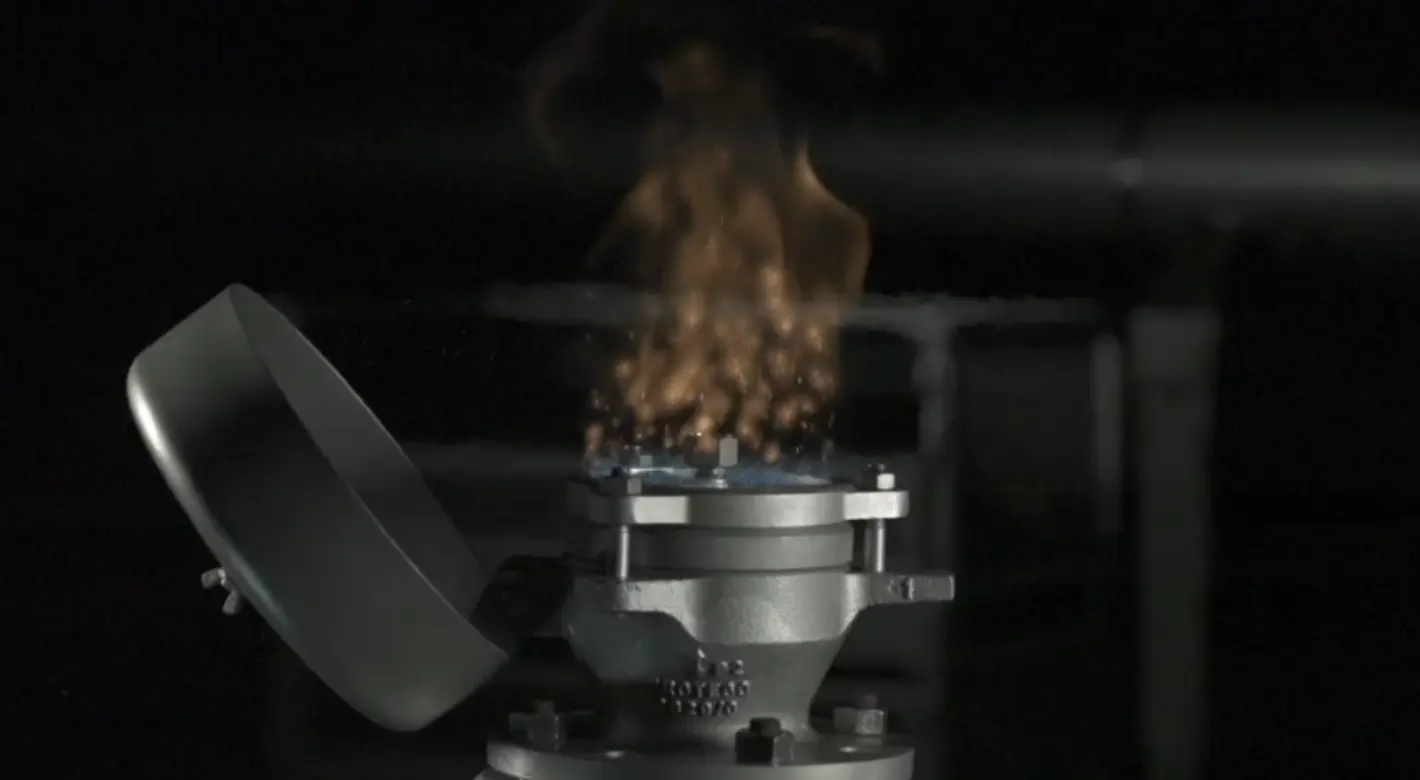
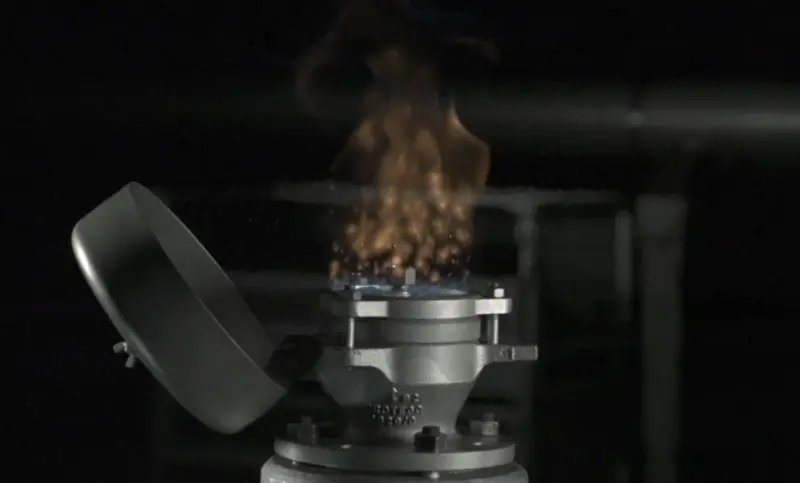
Flame arresters protect systems subject to explosion hazards. They sit at the opening of an enclosure or on the connecting pipe of a system of enclosures. Their job is simple, which is to allow flow but prevent the transmission of flame.
Potentially explosive gas / air mixtures can form around tanks and processing equipment. They could ignite. Protective devices are required for safe handling in dangerous atmospheres across industrial applications.
In modern process plants, vapours need to be disposed of in an environmentally friendly manner. They are incinerated according to air pollution control regulations, and explosive mixtures are sent to an ignition source during operation. These are particular hazards that must be countered with special measures.
How PROTEGO® Flame Arresters Were Developed
Early flame protection used gravel pots on fuel tanks. The gravel stopped explosions from entering storage tanks or connected lines. However, it had two serious drawbacks: non-reproducible flame-arresting capability and high pressure losses.
In 1929, a new development replaced loose gravel with wound corrugated metal strips. Combined with a patented shock absorber, this design stopped detonative combustion processes in the pipe with the lowest possible pressure loss. This became the PROTEGO® Detonation Detonation Explosion, die sich mit Überschallgeschwindigkeit fortpflanzt, gekennzeichnet durch eine Stoßwelle. Flame Arrester, developed by Robert Leinemann. He went on to found Braunschweiger Flammenfilter GmbH in 1954.
How Does a Flame Arrester Work?
PROTEGO® Flame Arresters operate on the principle of flame quenching in narrow gaps.
When a mixture ignites in a gap between two walls, the flame spreads towards the non-combusted mixture. The expansion in volume of the combusted mixture pre-compresses the non-combusted mixture and accelerates the flame. Heat is then dissipated in the boundary layer and transferred to the large surface of the gap length compared to the gap width. By cooling the product below its ignition temperature, the flame is extinguished.
Why Gap Width and Gap Length Matter
The gap width and gap length of the flame arrester element determine its extinguishing ability:
- The narrower and longer the gap, the greater the extinguishing effectiveness
- The wider and shorter the gap, the lower the pressure loss
PROTEGO® designs balance these two conditions. Special design features such as the patented Shock Wave Guide Tube Effect (SWGTE) and the shock absorber enable superior flow with minimum pressure loss.
How PROTEGO® Flame Arrester Units Are Constructed

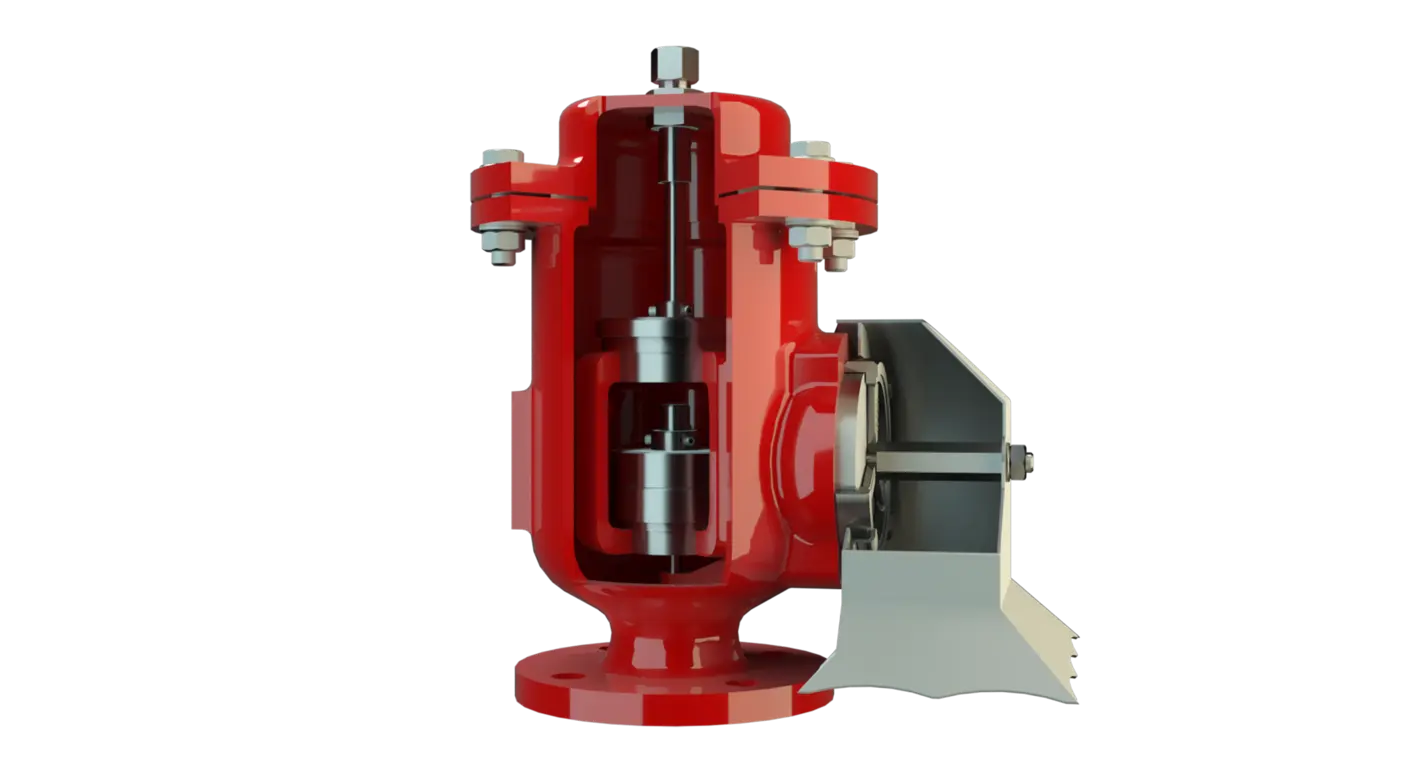
The PROTEGO® Flame Arrester Unit is a part of a Flame Arrester with the main task of preventing flame transmission. It is built from several FLAMEFILTER® components, together with spacers and a surrounding casing.
The FLAMEFILTER® is made of wound, corrugated metal strips and forms the flame arrester element. Gaps can be manufactured with consistently reproducible flame quenching capability. The gap size can be adjusted according to the flashback capability of the explosive mixture.
Combustion Processes - Flame Arresters Control
Deflagration is an explosion that propagates at subsonic velocity. Three types exist:
- Atmospheric deflagration: occurs in open air without a noticeable increase in pressure
- Pre-volume deflagration: occurs in a confined space, such as within a vessel, initiated by an internal ignition source
- In-line deflagration: an accelerated explosion within a pipe, moving along its axis below the speed of sound
Stabilised burning is the even, steady burning of a flame stabilised at or close to the flame arrester element. Short-time burning lasts for a specific period. Endurance burning continues for an unlimited period.
Detonation is an explosion propagating at supersonic velocity, characterised by a shock wave. There are two types:
- Stable detonation progresses through a confined system without significant variation of velocity and pressure characteristic. For atmospheric conditions, test mixtures, and test procedures, typical velocities are between 1,600 and 2,200 metres per second.
- Unstable detonation occurs during the transition from deflagration into stable detonation. The combustion wave velocity is not constant. Explosion Explosion Plötzliche Oxidations- oder Zerfallsreaktion mit Anstieg der Temperatur, des Druckes oder beider gleichzeitig. pressure is significantly higher than in stable detonation.
The position of the deflagration-to-detonation transition (DDT) zone depends on several factors. These include operating pressure, operating temperature, pipe diameter, pipe configuration, test gas, and explosion group. It must be predetermined by experiments in each case.
Types of PROTEGO® Flame Arresters
Flame Arresters are categorised by combustion process and installation type:
- Static dry flame arresters are based on the FLAMEFILTER® principle of flame quenching in narrow gaps, using wound corrugated metal strips.
Static liquid seal flame arresters use liquid barriers to stop incoming deflagrations or detonations from entering protected components. Two types exist. The liquid product flame arrester uses the product itself to form the seal. The hydraulic flame arrester breaks the flow of an explosive mixture into small bubbles flowing through water.
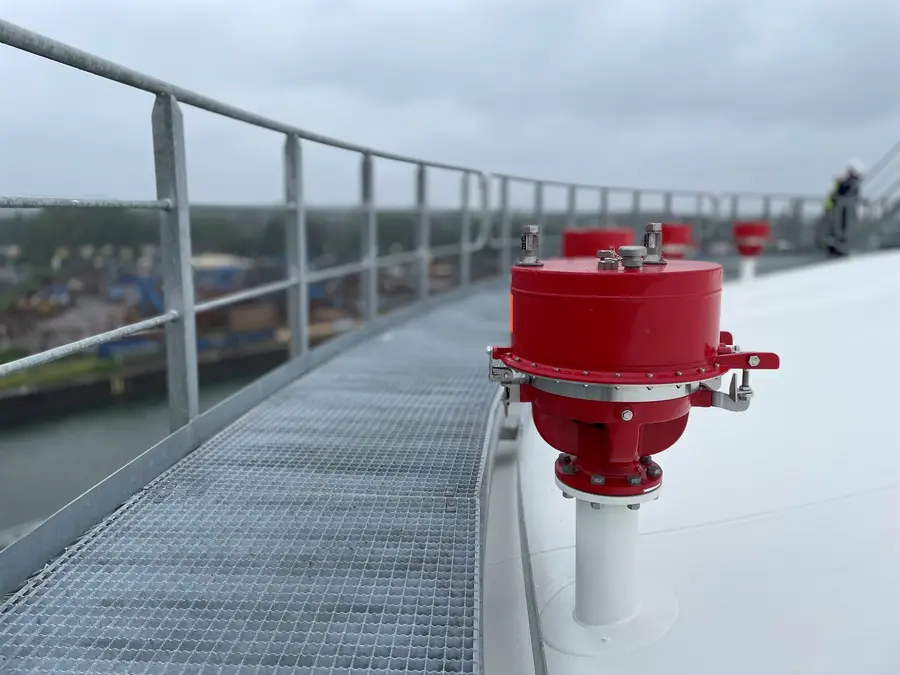

- Dynamic flame arresters produce flow velocities exceeding the flame velocity of the explosive mixture, preventing flame transmission. This principle is applied in PROTEGO® Pressure Relief Diaphragm Valves and High Velocity Valves.
Installation Location
The location of installation determines the protective task:
| Installation Location | Flame Arrester Type | Protection against |
| At the opening of a system part to the atmosphere | End-of-line flame arrester | atmospheric deflagrations and stabilised burning |
| At the opening of a component on a connecting pipe | Pre-volume flame arrester | flame transmission from inside an explosion-proof container to the outside or into a connected pipe |
| In the pipe | In-line flame arrester | deflagration and stable or unstable detonations in pipes |
Selection Considerations
Explosion Groups and MESG
Different gases have different flame propagation capacities. They are categorised into explosion groups according to their hazard level. The standard for this is the MESG, or Maximum Experimental Safe Gap. It is a characteristic number measured in the laboratory for the flame propagation ability of the product. Explosion groups use reference substances including methane, propane, ethene, and hydrogen.
Operating Pressure and Temperature
Flame arresters tested under standard conditions are approved for use at temperatures up to 60°C (140°F) and a pressure of 1.1 bar (15.9 psi). Higher operating temperatures or pressures require special examination.
L/D Ratio for In-Line Deflagration Flame Arresters
For in-line deflagration flame arresters, the allowable L/D must not be exceeded. L is the distance between the ignition source and the installation location. D is the pipe diameter. The flame arrester must not be installed too far from the ignition source. If it is, it may be subject to detonation due to a long starting distance. The allowable L/D is stated in the manufacturer's manual.
FAQs on Flame Arresters
It allows flow but prevents the transmission of flame. It is installed at the opening of an enclosure or on a connecting pipe.
Deflagration propagates at subsonic velocity. Detonation propagates at supersonic velocity and is characterised by a shock wave.
It dissipates heat into the boundary layer and across the large surface of the gap length. This cools the product below its ignition temperature.
The Maximum Experimental Safe Gap. It is used to categorise gases into explosion groups by flame propagation capability.